
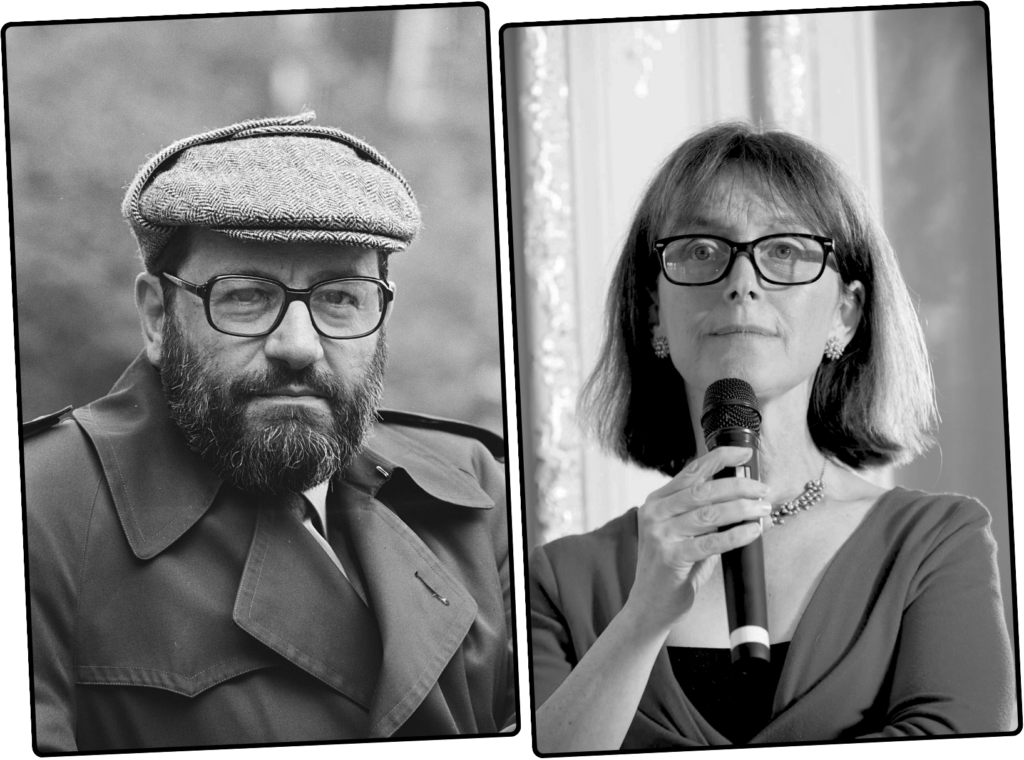
I listen to a bronze bell striking the hour across a ruined Galway valley. Its tone shapes the vacant air into a corridor of obedience. A hush older than mortar pools here, leaving the surface smooth while the mind keeps the knowledge of a downward slide. Six centuries divide this monastic echo from a rattling handbell inside a mid-century English girls’ boarding school, yet both sounds enforce an architecture of meaning upon the flesh moving through them. In the cloister, cowl or crosier marked a hierarchy of grace. Beside the dormitory iron cot, a gym-slip arranged a hierarchy of promise. The breath filling each enclosure carried codes sharper than winter chill. Latin chant echoed beneath ribs of vaulting, just as the clipped vowels of a head girl delivered a quiet warning during cocoa. One space raised its stone perimeter around the fear of heresy, while the second walled itself against social humiliation. Every rule drilled the exact lesson into the resident body—survival required fluency in a language of signs whose grammar seemed eternal. Within these two laboratories of significance, I observe Umberto Eco alongside Ysenda Maxtone Graham standing as patient anatomists of protocol. The Italian semiotician addressed macro-systems of metaphysical control. The British chronicler attended to the micro-politics of the schoolroom. Both authors watched the identical animal: homo significans, the creature building a soul from habits, uniforms, spoken regulations.
Memory begins as weather pressed into flesh, taking root where language falls short. I recall tracing the lichen-covered stones of Corcomroe Abbey, where rain etched grooves feeling like wrinkles under the fingers. Shadows bled up from the very soil, possessing the site long before any bell called men to prayer. The bog keeps its wet counsel, a brown rosary of turf-smoke mixing with bone. A body receives the earth solely as resistance, as temperature, as balance. Eco’s fourteenth-century monastery demands exactly this physical adjustment of the eye to penumbra.¹ I enter alongside William of Baskerville through freezing November air, stepping past a gatehouse where armed lay brothers watch arrivals with suspicion sharpened by schism rumours. Inside this precinct, every object already speaks. A wooden lectern implies an exact hierarchy of texts. The shaved scalp signals allegiance to a strict Rule. Light’s distribution across choir stalls translates theological priorities into masonry. Within that charged frame, a series of deaths breaks the routine of compline. The community responds through interpretive fervour. Steeped in apocalyptic exegesis, local monks assemble the corpses as stages in the ascent of horror, aligning each wound with an eschatological trumpet. Scriptural commentary supplies the grid. Biography simply fills the assigned boxes. William, schooled in Franciscan empiricism, advances down the aisles using a different method. He treats ink stains or footprints upon frost as indices promising causal chains. The abbey becomes a field where two hermeneutic regimes confront one another. The vertical system seeks a heavenly voice in every anomaly. A horizontal approach traces immanent links among books or motives.
Meaning loves a deadline, lending sharpness to the decision when the hour ends. Eco’s decisive stroke arrives when both regimes falter. A pattern of deaths arises from the topology of the library, originating in a cataloguing scheme turning missteps into mortal peril. The ultimate cause rests in Jorge of Burgos. The old librarian treats Aristotle’s lost tract on comedy as a dreadful threat to sacred order.² Human passion for doctrinal control burns hotter than the candles in the scriptorium. The flame finally consumes the abbey itself, which collapses in ash as if the architecture of knowledge carried a fuse from its foundation.
That blaze illuminates another closed universe inside Eco’s fiction: the cramped offices of a Milanese publisher during the late twentieth century. Drunk on esoteric reading, local editors feed a computer with scraps of occult lore until the machine yields a putative Plan governing all human history.³ The fictional monastery’s shelving system returns as data structures. Once again, a contingent arrangement of signs, treated as destiny, generates revelation alongside catastrophe. Those editors begin by mocking customers who submit wild conspiracy theories, eventually inhabiting one themselves. The author’s long philosophical preparation had already framed such narratives. The concept of the open work insists every artwork welcomes multiple legitimate readings while resisting interpretive anarchy.⁴ His semiotic treatise formulated culture itself as a field of codes, from liturgy to traffic lights, each rule linking an expression to a content within social practice.⁵ Later, alarmed by interpretive delirium, he diagnosed the cancer of rampant interpretation, where hermeneutics loses respect for internal textual constraints.⁶ The abbey alongside the Plan supplied narrative experiments testing those theories. They staged the temptation haunting any interpreter seeking a total system: the urge to press every sign into a lone pattern until the design demands blood.
Ysenda Maxtone Graham surveys a terrain lying under a metallic sky of English drizzle. Her corridors smell of floor wax, wet wool, joined by the faint metallic tang of institutional tea. Pupils in her primary study file into assembly beneath a portrait of the founder.⁷ The staff sits in a separate row, bearing hems loaded with meaning. Housemistresses enforce implicit rules with the quiet efficiency of a monastic synod. A girl buttering toast to the edge of the slice signals greed. Her classmate leaving crusts whole implies fastidious rebellion. Both might receive a freezing smile carrying extra weight. The lexicon of the dormitory—words like pash, side, or cissy games—works as an oral canon, policing desire through ridicule. In that domain, an illicit sausage smuggled from the refectory possesses the emotional density of a relic. Ownership of a trunk can settle a child’s place for years. Graham listens while former pupils recall how a careless remark during Prep condemned them to a winter of whispered mockery. An invitation to share a kettle felt like admission to an inner sanctum. She extends her observation to neighbouring worlds, recovering the middle-class home front behind Mrs Miniver through a biography removing the gloss from a wartime icon.⁸ Her inquiry also maps a small Catholic preparatory school where a headmaster’s quirks shaped a generation of boys.⁹ Across those settings, she charts a complete semiotic economy of class, piety, along with emotional stoicism.
These two authors belong to different centuries or tonal registers, yet each space functions as what Pierre Bourdieu would recognise as a training ground for habitus.¹⁰ Here, bodies learn to move, speak, desire according to a classed sense of the self. Libraries, refectories, games fields act as machines producing dispositions. Every rule about shoes in corridors engraves a portion of that machine’s pattern into muscle memory. Walls hold memory the way bone holds ache, carrying the echo of names once shouted across polished floorboards. Graham’s account of side—the fatal offence of behaving as though one believed oneself exceptional—aligns exactly with Bourdieu’s observation regarding bourgeois taste veiling domination under the guise of natural ease. Meanwhile, Eco’s monks illustrate another aspect of the same sociology. An intellectual elite whose control of symbolic capital supplies real power over life. The specialist in apocalyptic exegesis exemplifies a figure whose mastery of obscure codes translates into authority over others’ fates. The forearm tightens into care, revealing how the ear opens only after the hand opens first.
I remember a conversation with an old schoolmaster in a wet Galway parish, rain lashing the windows. —Words hold their own weather—he said. —They soak through the bone over time—I replied. —True enough. A boy learns his place from the silence following the cane—he added. That silence functions as a powerful disciplinary tool. Erving Goffman enters this specific field with a closer lens, providing a lexicon for such interactions.¹¹ His theatre of everyday life finds vivid enactment in the English school. The girl in the changing-room rehearses a persona—sporty, pious, ironical—before the mirrors. The housemistress goes on stage during house prayers with a carefully calibrated blend of affection matching menace. Every corridor becomes a backstage area where reputations are repaired or sabotaged. Eco’s monastery carries similar dramaturgy, though its script appears in Latin rubric replacing timetables. William stages a performance of rational inquiry before Abbot or Inquisitor. Jorge projects blind holiness while hoarding books with the zeal of a dragon. Goffman’s insight suggests identity depends on the successful management of impressions, under the constant risk of embarrassment. Mary Douglas, analysing how societies distinguish purity from danger, offers another bridge.¹² Her claim that dirt means substance out of bounds casts a strong light upon the panic released by deviant behaviour in both abbey or school. Any marginal gloss straying beyond doctrinal orthodoxy appears to the librarian as pollution threatening the total symbolic order. The student showing excessive intellectual eagerness disturbs the delicate balance of her peer group, drawing sanctions with ritual regularity.
Victor Turner’s work on rites of passage sharpens the point.¹³ Both Eco or Graham attend closely to thresholds. Cloister doorways, dormitory entrances after lights-out, the limbo of a train carriage conveying freshers to their first term—all serve as sites of transition. Those zones suspend ordinary rules, permitting either communitas or heightened cruelty. Older girls test newcomers with pranks bordering upon hazing. Through those anthropological lenses, the abbey emerges as a ritual theatre where bodies cross from one status to another under the supervision of guardians serving higher goods like orthodoxy or discipline. Eco wrote under the long shadow of twentieth-century European violence. As a child of Piedmontese anti-fascist households witnessing the Repubblica di Salò, he drew a lifelong line separating rigorous interpretation from ideological regression. His later reflection on ur-fascism enumerated features recurring wherever authoritarian movements gain ground: cult of tradition, rejection of difficult thought, obsession with conspiracies, a desire for a final purifying conflict.¹⁴ The monks watching the abbot’s authority erode under inquisitorial scrutiny live within those dynamics. Eco’s satire strikes hardest where philosophical laziness meets political appetite. The conspiracists inside his novels transform misreadings into programmes of action. They illustrate how a culture abandoning critical limits on interpretation slides into persecution. His scholarly insistence on the constraints that textual structures impose on readers therefore carries an ethical charge. An open artwork still sets boundaries distinguishing inventive engagement from paranoid hallucination.
Sentences behave like corridors in a house raised on a cliff, opening finding some sudden drop where sea meets darkness. I walk the bog roads of my own country, watching the road lean like old men forgetting their names. A writer lets the madness hollow him, filling him with its cold air, or he steps away, keeping his sleep. Tragedy arrives independent of clocks or calendars; it unfolds before time laces up its boots. We live as archives, suspended between record alongside renewal. The sea at dawn looks like poured lead, heavy, pitted, the exact surface a coin-maker would stamp with a saint’s face. This heavy physical reality grounds any theoretical flight. When I read Eco’s dense scholastic disputes or Graham’s accounts of cold linoleum, I feel the chill in my own joints. Meaning requires a physical anchor. Words demand a body to carry them across the threshold. The rusty length of an iron key points obliquely, holding every story the cathedral has taken into itself. To write about these authors, I must have built the little boat in the dark shed, understanding the labor of assembling a world from scraps of memory. Something stays beyond the edge of light—a presence withheld, that lived ache of standing in the gale. The wind strips the flesh of pretense, leaving only the essential geometry of survival. Eco’s monks alongside Graham’s schoolgirls share this exposure to the elemental structures of their respective institutions. The cloister acts as a stone lung, breathing in devotion, exhaling dogma. The boarding school operates as a brick stomach, digesting childhood, excreting compliance. We fool ourselves thinking modern life escapes these brutal metabolisms. The human creature constantly seeks a structure to inhabit, a set of rules to make the void bearable. I run my hand along a drystone wall, feeling how the stone retains the builder’s intention centuries later. Text operates the exact way. The ink dries, the author perishes, yet the sentence continues exerting its heavy pull on the reader’s mind.
Ysenda Maxtone Graham faced another kind of historical weather—the slow dissolution of an English social formation treating boarding schools as pipeline to national character. Her time-frame, 1939 to 1979, encompassed war, austerity, the end of empire, the hesitant rise of co-education. Interview after interview revealed a mixture of nostalgia matched by relief. Former pupils remembered hunger, cold baths, sudden verbal cruelty from staff. They also spoke of friendships forged under duress, invoking a shared idiom still shaping their speech decades later. In terms Pierre Nora developed for French memorial culture, those schools persisted as lieux de mémoire.¹⁵ Here, a certain Britain continued to exist in memory long after the social milieu sustaining it had thinned. Graham wrote at a moment when that world could still be summoned through living testimony. She caught its cadences before they faded into archive or caricature. Her work grants historical density to experiences official histories of education usually compress into policy debates. Every anecdote about confiscated tuck carries implications for gender, class, the management of emotion in late imperial Britain. The smell of boiled cabbage evokes a whole era of postwar rationing, triggering visceral memories of endurance. I understand this impulse to catalog the vanishing world, having spent years recording the folklore of Galway fishermen before the trawlers erased their traditional grounds. The archivist races against forgetting, knowing the fragile nature of oral history. Each recorded voice serves as a bulwark against the advancing tide of amnesia.
A comparison of Eco’s narrative method with Graham’s quiet observational humour gains clarity once I recall Mikhail Bakhtin’s account of carnival alongside the polyphonic novel. In Rabelais and His World, Bakhtin discovered a culture of authorised misrule where laughter toppled hierarchies for a brief season.¹⁶ Bodies reclaimed their mortality in grotesque festivity. Eco’s abbey allowed almost zero such carnival within its walls. Laughter there belonged to Aristotle’s forbidden treatise, locked away as an absence generating paranoia. In Foucault’s Pendulum, however, he staged an intellectual carnival. The editors’ game with occult materials began as a parody, a festive suspension of scholarly solemnity, before that inversion hardened into a new dogma. Bakhtin’s account of polyphony, developed in Problems of Dostoevsky’s Poetics, helps further.¹⁷ Eco liked arranging multiple discourses—scholastic logic, Franciscan pastoral, inquisitorial rhetoric, peasant superstition—in a lone scene. Each speaks from its own horizon, none fully subordinated to authorial commentary. Graham practised another form of polyphony. Her interviews preserved the distinct cadences of former pupils, allowing contradictions to stand. A headmistress’s recollection of lovely days coexisted with a former girl’s memory of the same woman’s sarcasm acting as a form of daily terror. The critic’s hand guided selection, yet voices retained their stubborn difference.
Erich Auerbach, tracing the representation of everyday life from Homer to Woolf, singled out modern realism for its willingness to treat humble settings as worthy of serious narrative attention.¹⁸ Eco or Graham inherited that investment, though they directed it upon very different scales. Eco’s abbey embodied a total quarrel concerning knowledge, faith, violence in Europe. Graham’s common room held a more modest yet equally telling quarrel concerning femininity, obedience, aspiration. In each case, a strictly rendered world of small details—inkpots, lecterns, tuck-boxes, hockey sticks—supported massive questions. Certain practices count as rational according to the prevailing authority. The ruling elite decides the parameters of permitted public emotion. Subordinates receive strict training in suppression. The community handles dissent arriving in the form of laughter by punishing the joker. The librarian of Alessandria alongside the chronicler of the English dormitory answered such metaphysical riddles through scenes, eschewing theses. Eco showed minds craving a lone, absolute scheme, paying with fire. Graham displayed souls accepting arbitrary laws of toast or lacrosse with a mixture of resignation matching tactical mischief, earning quieter scars. I read these two figures meeting across their differences in a shared conviction. Human beings live inside architectures of meaning which they inherit, reinforce, occasionally dismantle. The Italian walked through cloisters alert to the possibility that any pattern, once treated as sacred, might justify persecution. His British counterpart walked through dining-halls sensitive to the way a girl’s posture in a pew could determine her future circle of friends. Both authors treated the sign as the most beautiful, dangerous human invention. It serves as a device allowing transcendence of immediate circumstance while binding bodies to codes previous generations forged. Their work invites me to recognise those codes. I hear the bell calling one to prayer as a historical artefact, distinct from a decree from heaven. In that recognition, I gain a little freedom—enough, perhaps, to laugh harmlessly, to read freely.
Scholia:
¹ Umberto Eco, Il nome della rosa, Bompiani, Milano, 1980; The Name of the Rose, trans. William Weaver, Harcourt, New York, 1983. I hold the heavy hardback edition in my hands, feeling the textured dust jacket rubbing against my calloused thumbs. The physical weight of the volume mimics the dense theological arguments contained within its pages. Eco constructed a world requiring immense patience from the reader, demanding a physical commitment to turn the thick leaves. The Italian original carries a rhythmic cadence echoing the Latin chants of the monks, a linguistic layering Weaver translated with immense care. I read this book during a fierce winter in Galway, the wind howling against the windowpanes, the fictional snows of the Apennines merging with the Atlantic gale outside my door. The text becomes a physical artifact, a brick of bound paper anchoring my thoughts against the storm.
² Aristotle, Poetics, ed. trans. Stephen Halliwell, Harvard University Press, Cambridge, MA, 1995, pp. 21–25. The lost second book on comedy haunts the western canon as a phantom limb, an absence throbbing with unwritten laughter. I imagine the missing scroll sitting in a wet monastic cellar, the papyrus crumbling into dust, taking a thousand jokes into oblivion. Halliwell provides the surviving text with clinical precision, yet the void left by the missing section shapes our understanding of tragedy through sheer contrast. We possess the rules for weeping, lacking the philosophical justification for joy. The physical absence of the manuscript drives Eco’s plot, transforming a literary gap into a motive for murder. Silence fills the space where comedy should reside, a heavy quiet pressing down upon the scholar’s mind, demanding imaginative reconstruction to fill the historic crater.
³ Umberto Eco, Il pendolo di Foucault, Bompiani, Milano, 1988; Foucault’s Pendulum, trans. William Weaver, Vintage, London, 2001. This thick paperback sits on my desk, its spine creased from multiple readings over the decades. The story unfolds as a fever dream of esoteric connections, a warning against the seductive pull of hidden patterns. I trace the printed lines, recognizing the human desperation driving the editors to construct their catastrophic Plan. The sheer density of historical references acts as a labyrinth, trapping the careless reader inside a hall of mirrors. Eco masterfully demonstrates how intelligence turning upon itself generates monsters. The physical artifact of the book, heavy with ink, serves as a talisman warding off conspiratorial thinking. I feel the smooth paper under my fingertips, a grounding sensation counteracting the dizzying intellectual flights contained within the pages. The printed word offers a tangible anchor against the vertigo of boundless interpretation.
⁴ Umberto Eco, Opera aperta. Forma e indeterminazione nelle poetiche contemporanee, Bompiani, Milano, 1962; The Open Work, trans. Anna Cancogni, Harvard University Press, Cambridge, MA, 1989. I encountered this theoretical text during my university days, reading it under the harsh fluorescent lights of the library basement. The pages smell of old adhesive, carrying the faint dust of academic neglect. Eco argues for the reader’s active participation in making meaning, a concept resonating with my own experiences listening to folk tales beside turf fires. The storyteller relies on the listener to complete the narrative arc, a collaborative process mirroring the open artwork. Cancogni’s translation brings the dense Italian theory into a crisp English register, allowing the ideas to strike the mind with the heavy weight of a struck anvil. The book demands an engaged physical posture, forcing the reader to lean forward, pencil in hand, marking the margins with assenting or dissenting strokes.
⁵ Umberto Eco, A Theory of Semiotics, Indiana University Press, Bloomington, 1976, pp. 3–44. The cover of this edition features a stark geometric design, reflecting the rigorous structuralism housed within. I keep my copy annotated with faded blue ink, a record of my younger mind grappling with the mechanics of sign production. Eco builds a massive intellectual cathedral, detailing how every human action communicates a specific code. I observe the world through this lens, watching fishermen mend nets, noting how the knots signify a generational transfer of skill. The theoretical jargon sometimes feels heavy as wet clay, yet pushing through the dense prose yields a deep understanding of human communication. The physical book functions as a heavy anchor, grounding ephemeral cultural gestures in a solid theoretical foundation. Every page turned feels like breaking ground with a heavy spade, demanding exertion to uncover the hidden roots of meaning.
⁶ Umberto Eco, The Limits of Interpretation, Indiana University Press, Bloomington, 1990, Introduction and chap. 1. A strict corrective to the boundless relativism afflicting literary studies, this volume rests on my shelf as a necessary boundary marker. I admire the tactile sternness of Eco’s argument, setting hard limits on what a text will tolerate. He insists the text resists wild impositions, pushing back against the reader’s fantasies like a stubborn horse refusing a jump. The physical sensation of reading this book resembles walking a narrow ridge, needing careful balance to avoid falling into interpretive chaos. I apply these limits when analyzing rural myths, ensuring I respect the internal logic of the oral tradition. The printed words carry a defensive posture, protecting the integrity of the original author against the encroaching tide of subjective whimsy. The volume stands as a fortress of reason amidst a storm of rampant speculation.
⁷ Ysenda Maxtone Graham, Terms & Conditions: Life in Girls’ Boarding Schools, 1939–1979, Abacus, London, 2017. I purchased this paperback in a small shop near the coast, the salty air curling the edges of the cover. Graham captures a vanishing world with clinical precision, using the oral histories as bricks to reconstruct a demolished institution. I hear the voices of the former pupils rising from the page, their clipped accents holding back reservoirs of silent trauma. The physical book feels light, yet the subject matter carries the dense weight of suppressed emotion. Reading the accounts of cold dormitories sends a sympathetic shiver down my spine, a bodily reaction to the stark conditions described. The author treats the memories with immense respect, preserving the specific vocabulary of the schoolroom as a precious artifact. The text functions as a museum of etiquette, storing the rigid protocols governing a lost generation of women.
⁸ Ysenda Maxtone Graham, The Real Mrs Miniver: A Biography, St. Martin’s Press, New York, 2002. This biography peels away the propagandistic gloss covering a beloved wartime figure, revealing the sharp edges of a real human life. I appreciate the historian’s willingness to dig beneath the myth, using primary letters as tools to excavate the truth. The hardcover edition features a glossy photograph, a visual anchor for the textual dissection inside. Graham exposes the domestic strain hidden behind the brave public face, detailing the exhaustion of maintaining appearances during national crisis. I relate this stoicism to the silent suffering of rural families facing failed harvests, the exact refusal to complain masking deep internal weariness. The book demands a reassessment of heroism, locating courage in the mundane rituals of daily survival. The pages turn with a satisfying snap, each leaf pulling away another layer of historical fiction.
⁹ Ysenda Maxtone Graham, Mr Tibbits’s Catholic School, Slightly Foxed, London, 2011. A small, beautifully bound volume, this book feels like a missal in the hands, demanding a reverent touch. Graham chronicles the eccentricities of a headmaster running his institution as a personal fiefdom, shaping young minds through sheer strength of will. I see parallels with the parish priests of my youth, figures possessing undisputed authority over the local imagination. The specific details of the school—the smell of incense mixing with boiled cabbage, the sound of Latin prayers echoing off wooden panels—create a rich sensory immersion. The text preserves a pocket of idiosyncratic Catholicism, a strange bubble isolated from the broader cultural shifts. I run my fingers over the textured paper, feeling the weight of the past contained within the tight binding. The narrative serves as a warning about charismatic authority, detailing how one individual can imprint his obsessions onto a captive audience.
¹⁰ Pierre Bourdieu, Distinction: A Social Critique of the Judgement of Taste, trans. Richard Nice, Harvard University Press, Cambridge, MA, 1984, pp. 170–225. A massive sociological brick, this book physically dominates my desk, requiring a sturdy reading stand to support its bulk. Bourdieu dismantles the illusion of natural taste, exposing the hidden machinery of class replication. I read his dense paragraphs with a pencil, underlining the mechanisms converting economic capital into cultural prestige. The translation demands intense mental labor, mirroring the physical exhaustion of digging a trench through heavy clay. I apply his theories to the social hierarchies of rural Ireland, watching how land ownership dictates speech patterns at the local mart. The text operates as a devastating critique of elite pretension, stripping away the refined exterior to reveal the crude calculations underneath. The heavy volume stands as a monument to rigorous social analysis, demanding a serious physical commitment from anyone daring to open its covers.
¹¹ Erving Goffman, The Presentation of Self in Everyday Life, Doubleday, Garden City, NY, 1959. This yellowing paperback sits beside my typewriter, its pages brittle from decades of exposure to the salty sea air. Goffman transformed sociology by applying theatrical terminology to mundane interactions, a brilliant re-framing of human behavior. I watch people in the local pub adjusting their postures, performing their designated roles with practiced ease. The book acts as a decoder ring, revealing the invisible scripts governing a simple handshake or a casual greeting. I appreciate the lack of abstract jargon, Goffman favoring concrete examples drawn from observed reality. The physical text feels fragile, yet the ideas contained within remain sturdy, holding up under intense scrutiny. The act of reading becomes an exercise in self-awareness, making the reader hyper-conscious of their own daily performances. The volume serves as a needed field guide for walking the complicated social terrain of human interaction.
¹² Mary Douglas, Purity and Danger: An Analysis of Concepts of Pollution and Taboo, Routledge and Kegan Paul, London, 1966. A foundational text in anthropology, this book rests on my shelf with the quiet authority of a weathered standing stone. Douglas shifted the focus from exotic rituals to the universal human need for order, defining dirt as substance out of bounds. I use her insights to understand the strict boundary maintenance in rural communities, where breaking a social taboo carries the heavy stain of pollution. The text demands a slow reading pace, forcing the mind to reconsider the hidden logic behind hygiene rules. I feel the rough texture of the cover, a tactile reminder of the physical boundaries Douglas analyzes. The book strips away the illusion of modern rationality, revealing the primitive fears still operating in contemporary institutions. Her work provides a necessary lens for viewing the strict discipline inside the cloister or the boarding school.
¹³ Victor Turner, The Ritual Process: Structure and Anti-Structure, Aldine, Chicago, 1969. I carry this volume in my satchel when visiting ancient pilgrimage sites, using its theories to decode the physical movements of the faithful. Turner explores the concept of liminality, the dangerous transitional phase where ordinary rules evaporate. The pages contain diagrams of social movement, resembling the blueprints of a complicated machine. I sit near the ruins of a holy well, watching visitors step across the threshold, entering that suspended state Turner describes so accurately. The physical book absorbs the wet air of the field, the paper swelling with moisture, mirroring the fluid nature of the liminal stage. The text offers a deep understanding of how societies manage disruptive transitions, using ritual to safely guide individuals across dangerous social borders. The volume remains a heavy tool for breaking open the rigid shell of institutional behavior.
¹⁴ Umberto Eco, How to Spot a Fascist (Essay: “Ur-Fascism”), Harvill Secker, London, 2020. This slim pamphlet carries the explosive potential of a stick of dynamite, delivering a stark warning about the eternal return of authoritarianism. Eco lists the defining characteristics of fascist ideology, drawing on his own childhood memories of Mussolini’s regime. I read his warnings with a growing sense of unease, watching similar political currents swirling in the modern world. The physical text feels deceptively light, yet the argument lands with devastating impact. I trace the printed words, recognizing the cult of tradition operating in local conservative circles, the dangerous rejection of critical thought. The essay demands a vigilant posture, forcing the reader to constantly scan the horizon for the approaching storm. The printed paper serves as an alarm bell, ringing loudly in the silent study, urging immediate intellectual resistance against the encroaching darkness.
¹⁵ Pierre Nora, Realms of Memory: Rethinking the French Past, Vol. 1: Conflicts and Divisions (Essay: “Between Memory and History: Les Lieux de mémoire”), ed. Lawrence D. Kritzman, trans. Arthur Goldhammer, Columbia University Press, New York, 1996, pp. 1–20. A massive academic tome, this volume requires both hands to lift, its physical bulk matching the vast scope of its historical ambition. Nora distinguishes between living memory, embedded in the body, comparing it with the sterile archive of written history. I apply this distinction to the abandoned cottages dotting the Irish coast, recognizing them as physical markers of a vanished way of life. The translation maintains a formal, elevated tone, demanding a serious, upright reading posture. I feel the smooth, heavy paper, a material reminder of the archival process Nora critiques. The text operates as an elegy for organic community, documenting the modern reliance on external monuments to replace internal recollection. The heavy book stands as a tombstone for oral tradition, marking the exact point where lived experience solidifies into historical data.
¹⁶ Mikhail Bakhtin, Rabelais and His World, trans. Hélène Iswolsky, Indiana University Press, Bloomington, 1984. A joyous, disruptive book, this paperback bursts with the chaotic energy of the medieval carnival it describes. Bakhtin celebrates the grotesque body, the liberating power of laughter tearing down rigid hierarchies. I read these pages near the crackling fire, feeling the heat warming my skin, a physical parallel to the visceral celebration of flesh contained within the text. The translation captures the rolling, excessive rhythm of the Russian original, forcing the reader to surrender to its linguistic momentum. I contrast this festive misrule with the dour faces of local authority figures, recognizing the subversive threat a genuine laugh poses to strict order. The physical book feels worn from use, its spine cracked, embodying the rough, unpolished aesthetic of the folk culture it champions. The volume functions as a manifesto for human resilience, celebrating the indestructible vitality of the lower strata.
¹⁷ Mikhail Bakhtin, Problems of Dostoevsky’s Poetics, trans. Caryl Emerson, University of Minnesota Press, Minneapolis, 1984. This dense theoretical work sits heavily on the desk, demanding intense concentration to unpack its layered arguments. Bakhtin introduces the concept of polyphony, a narrative structure allowing multiple independent voices to exist without subordination to a lone authorial decree. I trace the tangled diagrams outlining dialogic interaction, feeling the mental strain of holding contradictory ideas in simultaneous balance. The physical text smells of old library glue, carrying the quiet scent of deep academic isolation. I apply his theories to the chaotic conversations overheard in the village square, recognizing the unresolvable clash of distinct worldviews. The book dismantles the illusion of a unified truth, championing a messy, ongoing conversation rejecting a final verdict. The heavy volume requires slow, deliberate reading, each page turning with the solemnity of a major philosophical concession.
¹⁸ Erich Auerbach, Mimesis: The Representation of Reality in Western Literature, trans. Willard R. Trask, Princeton University Press, Princeton, 1953; new expanded edn., 2013. A monumental achievement of literary criticism, this thick book anchors the corner of my primary bookshelf. Auerbach wrote this sweeping history while in exile, lacking access to a proper library, relying on his formidable memory. I hold the heavy volume, feeling the sheer weight of his erudition pressing into my palms. He traces the evolution of realism, showing how humble, everyday events gradually gained the dignity of serious literary treatment. I read his analysis of Homer near the sea, letting the rhythm of the waves match the steady cadence of his prose. The physical text serves as a monument to intellectual survival, a massive structure built under the extreme duress of war. The book demands a lifelong commitment, requiring endless re-readings to fully absorb its vast chronological sweep. The volume stands as a towering lighthouse, guiding the reader through the long, dark history of western representation.