
(Preface to the forthcoming book on Diego Rodríguez de Silva y Velasquez)
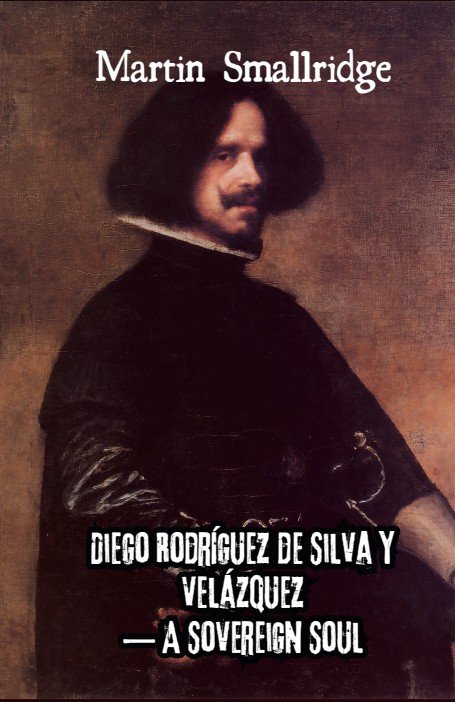
I carry a conviction about Diego Rodríguez de Silva y Velázquez that settles in the palm with the weight of warm bread and gleams like seasoned oil across a trusted pan. His work breathes across centuries because a parish bell with steady tone carries its call through kitchen heat and chapel incense as readily as through a royal corridor, so every strike of that bell travels into ordinary rooms and grand halls alike. As a reader of faces and a steward of light he walked through the seventeenth century with a gaze that honoured each presence in its own stance. I speak as a neighbour at a table instead of a herald at a gate, since I meet him across bowls and windows, through saddles and ribbons, in mirrors and doorways, while a hound curls in the corner and a child studies a ribbon with the grave patience of a magistrate. I welcome his company because he offers welcome first, and he offers it through patient handwork that carries grace. His pictures behave like strong friends, since they stay cheerful and exact and they keep loyalty through every turn of weather.
A vigorous faith in creation guided his hand. I encounter a creed inside those surfaces, a theology of painting that rises from the body and climbs toward praise. Many people tell of providence that steers the wrist like a wind filling a sail, although I attend to a source that flares from within. A divine ember lives in the painter’s chest, planted with the first breath and fed by labour that tends with care and moves through courage. The flame hungers for matter, and pigment answers with gladness. The brush meets ground the way a finger anoints a brow. A face gathers from tone and edge, a sleeve fills with breeze, a stirrup throws a glint, and a nation learns how to see itself with clear pride joined to humble candour. The ember warms the room so that everyone inside breathes easier and stands taller. I call this a theology because it speaks about first things and last things with the calm of work carried through and the grace of gratitude.
A life begins in Seville where heat lifts from stone and oranges crowd branches. Ships ease into harbour so that crimson cakes of cochineal and blue bundles of indigo pass from deck to quay while merchants argue beneath awnings and confraternities raise their banners as the cathedral folds the city in a wide embrace. A boy learns the discipline of a painter’s room, since canvas stretches, pigment grinds, ground primes, charcoal draws, colour settles, glaze seals. He receives the grammar of saints alongside the poetry of bowls and knives. He hears the round O of evening song and watches hands that earn bread. Every pulse of that world enters his blood and sets tempo for decades. The bodegón offers a first pulpit because an egg on a pan, a melon whose seeds shine like stars, a wineskin with a glistening lip, an elder mistress of timing, and a youth hungry for skill gather in a single kitchen. That kitchen teaches fairness in looking and firmness in touch. It blesses daily labour with festival colour and claims that colour for truth through sincere pride that carries witness with steady poise, since swagger would sour the witness. From such an altar of pots and patience a painter rises, and the city answers with commissions that feed a household and lift a name. Through such beginnings a creed comes into focus, because the world pours out a flood of forms and the painter replies with order that grants each element a voice. That order grows with tenderness while Velázquez steadies geometry inside air, angle inside curve, weight inside ease, until the room breathes exactly. He chooses honesty ahead of flourish and presence ahead of noise, trusting a quiet halo of value around a head to raise a person into dignity. He measures light like a steward who loves ledger and household alike. A picture becomes a dwelling where appetite meets meaning and where sight learns courtesy.
I speak about ecology as well, since every painter grows inside a habitat shaped by material care, shared story, and sworn duty. The ecology of Velázquez’s painting rises from a belief that art stands higher than daily chatter and carries power to reform that chatter. He rises early while cleaning tools and greeting patrons and meeting deadlines, so that such chores lay the ground for flight. A studio keeps its own ritual and its own smoke, with brushes combed and pigments asleep in jars like seeds that wait for the warming touch. The painter thanks the Creator for arm and eye, for patient apprentices, for steadfast family love, for the wooden floor that receives each footstep with grace. Composition springs from that thanksgiving as ordered gratitude. The canvas turns into a table prepared for a generous company, since saints sit near jesters while queens share air with smiths and hounds stretch beside children. The painter presides with humble ease, far from pomp, assigning each guest a place through tact and granting each a share of air.
The pilgrimage of his career bends toward Madrid, and the court greets him with gold-threaded fabric, strong horses, and poems that chase favour through corridors. He enters with the same hand that once caressed the egg on a pan, and he studies the young king with the very attention he once offered a cook. Such equality opens the heart of his ethic, since each face receives fairness through his gaze, each hand receives light, and each fabric receives air. He sees mortal fragility behind the crown while sensing sovereign weight inside a servant’s patience. He lifts a groom toward the standing of a philosopher and lends a philosopher the plain humility of a groom. The palace learns that grace speaks with greatest clarity when the painter greets sitters as neighbours who carry duty and dream together. The kingdom gains through that lesson, since a court that learns to see its people discovers a road toward justice that rises from affection distinct from fear.
Desire lives in this work. Velázquez loves mastery and embraces it with unapologetic assurance. He enjoys the daring act of leaving a passage open while trusting the viewer’s eye to finish the motion. He hungers for the fit between a stroke and a fact—one cheekbone, one cord, one buckle, one glint on a stirrup. He delights in the playful resistance of paint that slips free of control for a heartbeat and then yields once the hand settles into right pressure. He tends an appetite for truth with the same patient devotion a gardener gives rosemary, so that the fragrance spreads through the room. Desire for honour joins desire for accuracy, and together they raise the labour into a vocation. Dilemma arrives as well because every career rubs against limit and demand. He serves a ruler, and a ruler seeks images that flatter strategy while also revealing character. He steers that difference through a steady hand, shaping portraits that praise through truth. He paints court jesters with the same gravity he grants dukes, and through that act he bears witness to a kingdom of souls that share a single value field before God and before the eye. He carries two candles into the same room—one for fidelity to truth and another for the peace of the realm—so that twin flames enliven the air in preference to consuming it. Through such balance he models citizenship for painters and policy for kings.
The movement of his style traces a path from density toward air. Early works weigh objects with a sculptural mass, while mid-career pictures begin to lighten, and by the time his hand lifts a brush for the great royal portraits and the late marvels, the surface opens like a window at evening so that the viewer drinks a draught of life through each passage. He learns to set edges that barely whisper, while he keeps a few accents sharp to anchor sight. He grows bolder with broken strokes that read as fabric from across the room and as near music at arm’s length. He lets the ground assist gently instead of ruling the field, and he favours a living surface in place of a varnished mask. The present tense of vision governs the act of looking, and that feeling reaches every generation, since the present carries youth that renews itself again and again.
A theology presses from within this evolution. Creation stands worthy of love because a Creator breathes through it, and matter bears a signature of glory. Truth and mercy walk as companions, so a face receives accurate planes and tones, and grace arrives beside that accuracy through air and light. Dignity follows attention, and whoever receives the painter’s full regard rises to meet it. Joy follows order, and each arrangement serves as a liturgy for sight. Skilled hand equals prayer, since every repeated motion of preparation and application joins body and spirit in a hymn that feeds the world. Such a creed yields an ecology of practice in which composition acts as thanksgiving. Velázquez lays out rooms where doors swing, curtains lift, and mirrors answer with sly echoes. Lines flow toward a centre where presence concentrates. He sends diagonals across the field so that energy pulses in grace, while verticals rise like columns of breath. He lays a floor that invites the foot and a ceiling that receives the gaze. Viewers who arrive burdened feel their shoulders drop, while viewers who arrive proud feel that pride soften into fraternity. The picture turns into a civic square where difference enjoys harmony.
I address honesty as well, since his ethic depends upon it. Velázquez honours honesty and turns drama toward truth. He paints silk as silk and steel as steel, then grants skin its living warmth and air its lift. He chooses the exact pitch for each tone, then binds the field through mutual respect among colours. He lets a fortunate accident live as grace, and he corrects a stray mark once it threatens harmony. He resists crowding a figure with tricks. He keeps bravura for a buckle or a sudden flare on a bridle. He trusts the humility of broad middles that carry the weight of the day. The viewer feels safety inside such honesty and allows the heart to open.
His road toward Italy enriches this ethic with confidence. He studies Titian and learns from Rubens while greeting ancient sculpture with a maker’s curiosity, so that he strengthens an already sturdy eye through dialogue with a wider family. He carries home a renewed sense of colour and a freer hand. He sees how a single loaded stroke can lift a beard into life and how a warm ground can bear the burden of flesh with near-musical ease. He places myth beside court and turns both into living present. He paints armour that weighs as much as conscience and flesh that carries grace with unapologetic tenderness. Friends and rivals welcome this voice because it speaks as a peer with plain confidence and as a pupil with courageous eagerness.
A philosophy of vision moves through all of this, since Velázquez sees the world as a fabric of relations through which light passes into air before finding a home on every surface. Because eyes meet eyes they raise questions about self and other, while mirrors test identity and frames test authority, and windows open toward horizons. Dogs and horses carry the weight of royal ritual along with the comfort of daily affection, while children assert a tiny sovereignty that every adult respects and servants carry skill with proud assurance. Painters join these relations through an art that can unite and clarify, that can lift the spirit and console it. The world answers by becoming ever more itself. Love fuels accuracy and feeds patience, and love welcomes a sitter into a space where nerves settle and dignity rises. Velázquez conducts sessions with a warmth that invites candour, since he offers silence when speech would drain energy and conversation when a sitter seeks ease. He works with an economy that honours time because he senses fatigue before it reaches the threshold and concludes before grace frays.
Certain readers ask for doctrine stated in a clearer register than rules of thumb or homely praise, and I answer with a single claim: painting in the hands of Velázquez acts as a sacrament of attention. A sacrament joins visible sign and invisible grace, so that when he sets down the exact relation of values across a face or the fitted arc of a bridle or the faint haze of breath in a winter field, a grace unseen arrives through that fidelity. The viewer feels gratitude that spills outward into care for people outside the frame, because the habit of seeing well trains the mind toward fairness and the heart toward mercy. The ecology of looking stretches from materials and methods into the gathered community of viewers. A courtier recognises confirmed standing while a child delights in a dog’s steady gravity, and a scholar hears conversation with antiquity while a worker tastes the honour of labour in the steel of a stirrup and the nap of a cloak. Such pictures act as common ground. Through that effect Velázquez strengthens civic life, since he opens rooms where people of rank and people of trade share a floor and speak kindly about what they witness.
He practises gratitude throughout. Such gratitude reaches tools and models and patrons, and it reaches the long lineage of masters who opened a path and the comrades who opened doors and the wives and children who held the home through every season. Gratitude lengthens patience and clears the eye while steadying ambition and answering envy with quiet work. He paints gratitude into a copper pot through a ring of light that smiles, and he paints the same gratitude into a young prince’s cheek through a tone that breathes. A language of ceremony endures even when a subject appears casual, since an everyday gesture rises into ritual once the painter frames it. A dwarf’s lifted hand speaks like an oration, and a glance between siblings seals a covenant. Colour dresses for festival in honour of such truths, because scarlet deepens like ripe berry while black carries a hidden ember and white lifts a breeze into the room. The creative act itself presents as a solemn feast that binds skilled making to praise. He keeps near kitchens and courtyards, far from any ivory tower. He paints rooms where people learn how to see one another with armour set aside.
Reality arrives as sensation, thick and layered, while paint rearranges that sensation into ordered singing. Velázquez selects and balances, then releases, so that clutter yields to essence and the eye follows a guided path in which pleasure receives full seriousness and meaning carries an even greater charge. He grants reality a second life in which an egg keeps its quiver above heat through all time and a queen’s thought rests just behind her gaze so that it speaks across centuries. Such second life honours the first life and magnifies it. Through every stage of his career a single current flows, because attention transfigures matter. That current lifts apprentices toward mastery and viewers toward witness, and it builds a republic of sight where fairness flourishes because eyes grow accustomed to telling the truth. Rubens arrives with a tide of splendour and leaves both friendship and challenge, while Italian travel sets seeds that grow into freer handling and deeper glow. Spanish poets feed the room with stage-fire and lyric pulse that enrich each composition. The studio turns into a parliament of making where laughter serves law and law serves freedom.
A scholar may press for sources and dates and the scaffolding of fact, and the present foreword welcomes that labour while offering a different scaffold made from interior witness, practical wisdom, and praise so that a space opens for the soul of the matter. I hold that a divine element in the artist sustains every technical triumph. A person breathes and grace enters with the air; grace meets attention; attention lights the way toward truth; truth flowers into beauty; beauty returns as gratitude; gratitude becomes service; service fructifies in community, and art keeps that circle bright. I speak from the island of Ireland, a hearth culture that prizes fair speech and spirited wit, with rain that polishes stone and encourages long conversation. I carry friendship with artisans who trust the patience of hands. I walk with Velázquez through galleries and kitchens and feel that Ireland and Spain share an affinity for stubborn grace. Scholars and lovers of art sometimes speak about genius as a storm that arrives with a wild pattern that escapes forecast. Velázquez offers another charter because genius lives through discipline, joy arrives through habit, and freedom grows from form. He built a practice that carried him across decades with steady gain, and a nation profits from such example every bit as strongly as from a treatise.
God creates a world that thirsts for recognition, and the painter recognises it so that the world answers through a chorus of forms that step forward for praise. Water glints while metal flashes; fabric breathes while wood carries memory of the tree; a horse tests the ground and a baby studies a ribbon. The painter records these friendships among things, and that record grows into a friend in its own right. The chapters ahead carry names and dates and technique, and they weigh choices within context, tracing convergences and tensions with eagerness while following each thread toward a fair conclusion. The book speaks of growth through attention and of beauty as evidence of truth. The first lesson stands here in plain speech: a divine ember in the artist’s soul burns with tranquil strength, and Velázquez guarded that ember through fidelity to practice and through love for the world.
Las Meninas stands at the centre of the conversation that follows, since the room opens like a mind at work. The painter stands with a large brush beside a canvas that faces us, while a princess receives air and affection through hair that lifts like wheat in a mild breeze. Maids attend with gravity, and a chamberlain pauses in a doorway that gleams like a promise. A mirror sings with a secret as the sovereign pair appears as reflection, so that the true seat of sovereignty shifts toward vision itself. Authority loosens its claim on permanence inside this room, because vision rules when love joins order. The picture functions as a republic of looking, since subjects and rulers trade glances under equal light, and skilled making speaks with power as childhood and authority share one floor. The mirror bears witness, the canvas bears labour, and the air bears mercy.
Few scenes of war carry greater courtesy than The Surrender of Breda, since spears lift like a small forest in patient alignment while a general offers a key with humility that honours both armies and the victor receives it with a gesture that binds mercy to strength. Velázquez paints victory as hospitality, so that faces turn away from rage and wear fatigue twined with relief. The painting proves that beauty and justice can share a saddle.
The Spinners celebrates making as myth while myth flows back into daily making, because the foreground hums with women at work, wool flying through fingers, and the back room stages Athena with Arachne. Velázquez joins both rooms with a silk thread of meaning so that workmanship becomes the stage for insight and the moral carries a plain charge: mastery asks for humility, and humility unlocks wider mastery.
The Rokeby Venus offers a further register of courage. A back curves with an ease that welcomes air, and flesh carries life through a tender matte glow more inviting than any surface shine. Desire receives form and dignity, so that the viewer encounters a presence that invites reverie in preference to appetite alone. The divine ember in the artist glows through such balance, because eros rises and bows before beauty that refuses possession and offers communion in its place. Court jesters and dwarfs claim special honour in this vision, since bodies shaped by fate and lives shaped by service receive full sovereignty within the frame. Handsome lace, proud posture, and a stare with steel create a presence few sovereigns could surpass, and the picture refuses pity while offering equality and a field of grace.
The entire body of work forms a school for seeing. When a viewer stands before one canvas, a hand with a spoon steps into focus. When the same viewer faces another, a glint on a curb chain carries the day. When the viewer turns to a third, a shaft of light across a floor becomes a sermon about presence and absence. Through such guidance the painter trains the eye to weigh worth, to recognise the element that anchors harmony, and to take delight in the exact pitch of small things. I acknowledge silence as a partner in his method, since silence surrounds the sitter in the first minutes and listens to fabrics while the hand prepares the palette. Silence gathers in the pause between two sessions, then enters the room with varnish and blesses the finished surface so that silence settles in as a companion who offers calm steadiness.
I return to the prayer that shapes composition, since the painter stands like a celebrant. Ground becomes bread prepared for a feast, and drawing becomes the reading of a gospel that sets the story in motion. Modelling becomes homily offered with care, through which each volume receives clarification, while glazing becomes the gathered prayers of the faithful that fill the room with warmth. A final highlight becomes a dismissal with blessing, and the finished picture hangs like a hymn that carries across years and through rooms alive with new generations. He guarded an ethic across the conduits of history, because Atlantic routes, Mediterranean ties, Iberian courts, and the guild tradition all carried his name. He accepted commissions that served strategy and he supplied those commissions with truth bright enough to guide policy. He remained faithful to a realism charged with spirit, and that spirit rewarded him with a finish that greets each encounter with fresh grace.
We move through time alongside him now. We visit Seville where eggs shine and water beads on clay, then we walk into Madrid where kings breathe and dogs sleep, then we sail to Rome where a scarlet mozzetta glows like embers at dawn. We return to the workshop where apprentices sweep and sharpen, and we attend the instant when a brush finds a hairline edge that locks a likeness. We share the relief of a perfect tone placed after a long search, and we feel the warmth in the chest that follows a day when a picture advances a span wider than expected. Velázquez offers a humane politics through art, since rank answers to truth, truth answers to charity, charity answers to beauty, beauty answers to creation, and creation answers to God. He offers an education for eyes and a balm for pride. He offers a guide for makers and a shelter for weary hearts, and he issues a challenge for all who wield power. He paints a world where mercy carries weight yet keeps its gentleness, where elegance walks with duty yet keeps its warmth, where splendour moves with humility as a constant companion. A family that hangs a reproduction on a wall gains a daily school for attention and gratitude. A class that studies a scene gains a parliament of light where debate stays cheerful and rigorous. A studio that copies a head gains patience as second nature. I offer thanks for the cities that cradle this legacy, since Seville gives river light and orange scent with markets loud in friendship, Madrid gives corridors and councils with a palace that hosted a republic of images, Rome gives challenge with laurel, and Dublin gives a version of the Kitchen Maid with the Supper at Emmaus that carries a hum of kinship across waters.
Velázquez established a discipline of sight that joined beauty with discernment and form with conscience. His paintings disclose vision as an instrument of understanding, where the act of seeing refines both intellect and judgement. Each work arranges its world through balance that carries moral consequence: precision of edge mirrors steadiness of mind, and moderation in tone reveals an ethic of measure. Through such equilibrium, his art turns perception into reflection and craft into inquiry. Light assumes the weight of thought, and composition orders the field of experience so that grace appears as a natural property of truth. Across his legacy, seeing becomes a learned virtue—an education of awareness that instructs power in humility and the heart in proportion.